Key Takeaways
In summary, drone construction monitoring in Saudi Arabia delivers 90% faster surveys, 5x better accuracy, and typical ROI payback within 3-6 months. With over $1.1 trillion in active construction projects, drone technology is essential for Vision 2030 megaprojects.
- Drones reduce survey time from weeks to days with centimeter-level accuracy
- AI-powered change detection identifies issues in real-time, not weeks later
- GACA certification is required for commercial drone operations in Saudi Arabia
- The typical ROI payback period is 3-6 months for major projects
The Rise of Drone Technology in Saudi Construction
Saudi Arabia’s construction sector is experiencing an unprecedented transformation. According to industry reports, the Kingdom has over $1.1 trillion in active construction projects, making it the world’s largest construction market. With Vision 2030 driving massive infrastructure development, the need for advanced monitoring solutions has never been greater.
Research shows that drone technology has emerged as the cornerstone of modern construction management, offering real-time visibility, centimeter-level accuracy, and significant cost savings that traditional methods simply cannot match.
Why Saudi Megaprojects Demand Drone Monitoring
The Scale Challenge
Consider the numbers: NEOM spans 26,500 square kilometers, THE LINE stretches 170 kilometers, and Qiddiya covers 367 square kilometers. Data indicates that manual monitoring of projects this size isn’t just inefficient—it’s physically impossible with traditional methods.
Traditional surveying methods require:
- Weeks of ground-based measurements
- Large teams of surveyors
- Multiple site visits for comprehensive coverage
- Significant safety risks in active construction zones
The Drone Advantage
Studies show that modern drone solutions deliver:
- Complete site coverage in hours, not weeks
- Centimeter-level accuracy with RTK GPS
- 3D models and orthomosaics for precise planning
- AI-powered change detection between flights
- Safe, remote monitoring of hazardous areas
Key Applications Across Saudi Projects
Progress Tracking & Reporting
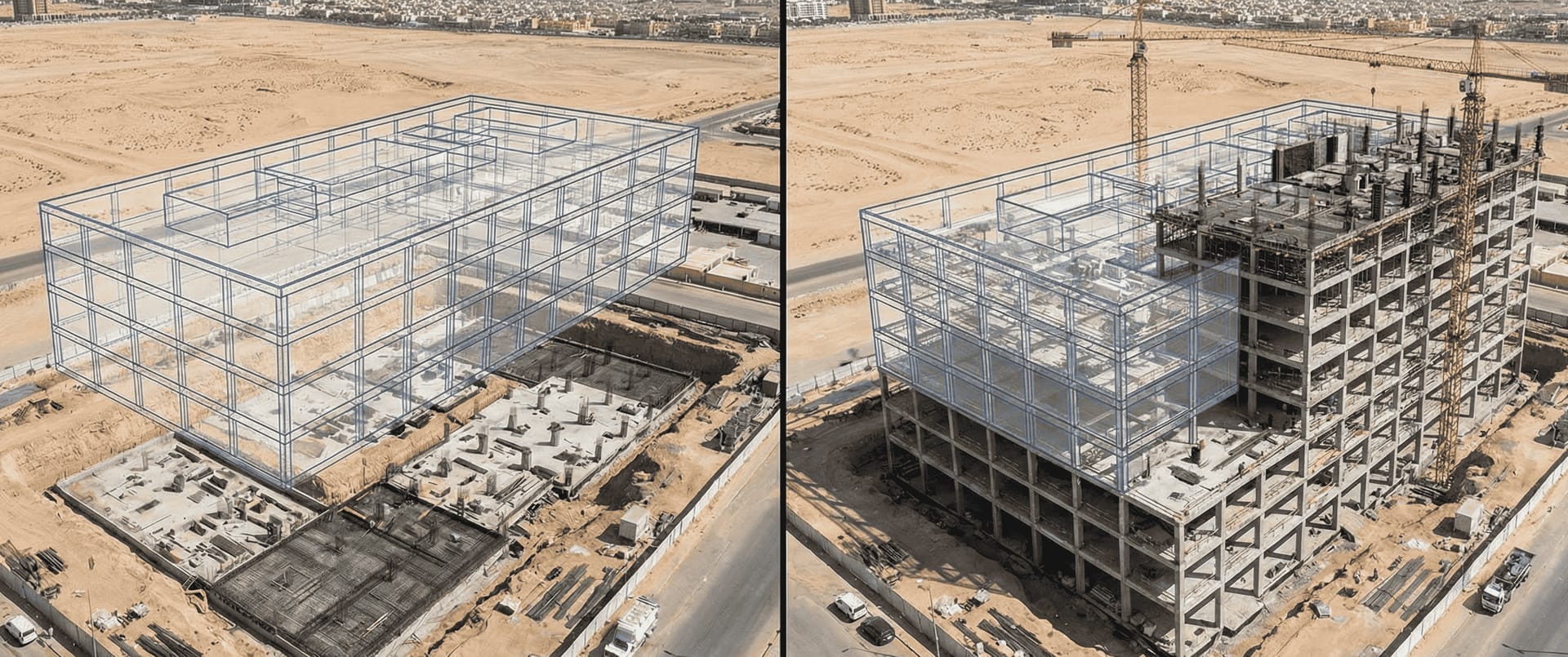
Automated drone flights capture comprehensive site data on schedule. AI algorithms compare current conditions against BIM models, identifying:
- Work completed since last flight
- Deviations from design specifications
- Material stockpile volumes
- Equipment utilization patterns
The bottom line is that project managers receive detailed reports automatically, eliminating hours of manual documentation.
Quality Assurance
High-resolution aerial imagery enables quality teams to:
- Inspect structural elements from multiple angles
- Document surface conditions and finishes
- Identify defects before they become costly problems
- Create permanent visual records for compliance
Safety Monitoring
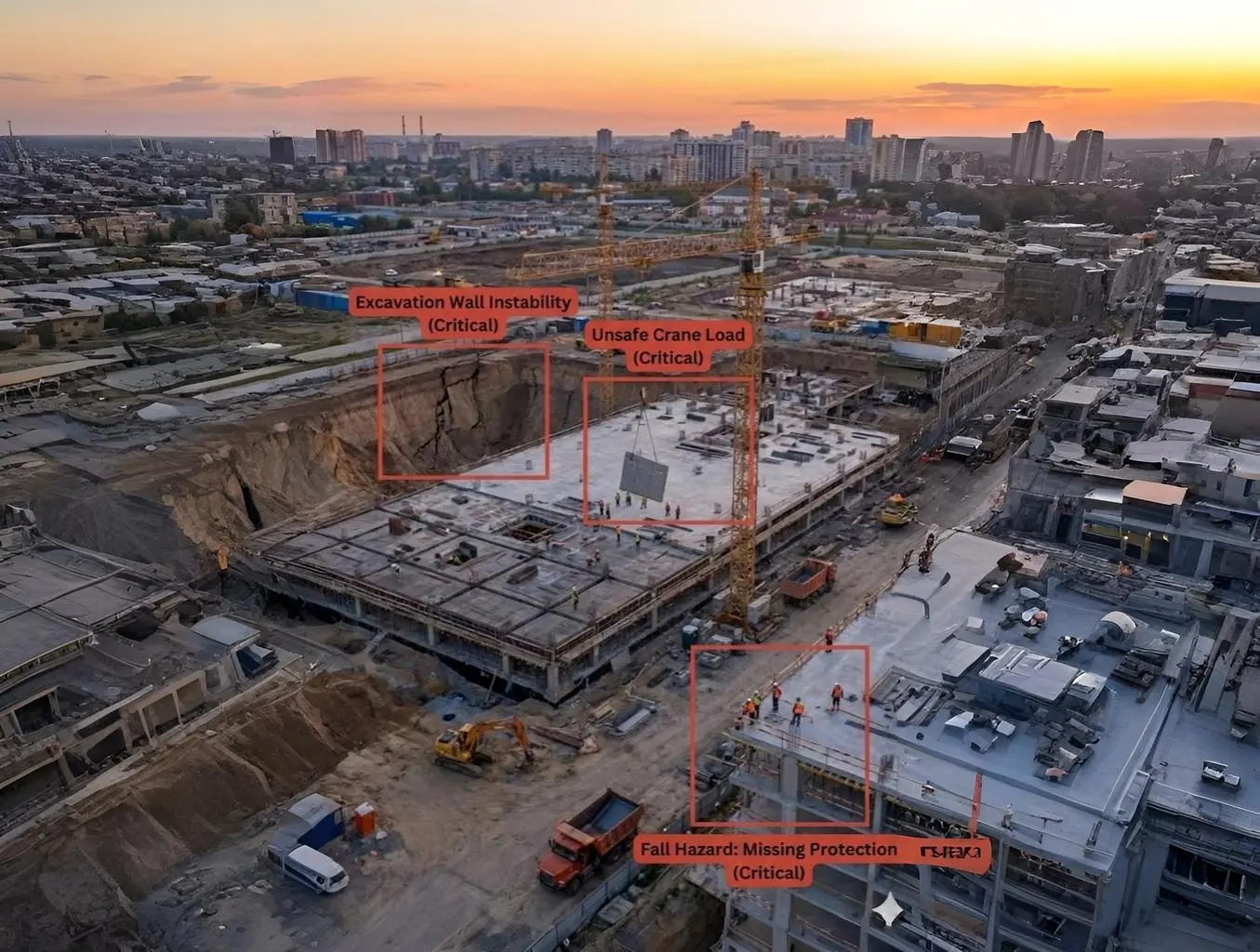
According to safety research, drones equipped with AI vision can monitor:
- PPE compliance across the entire site
- Exclusion zone violations
- Unsafe work practices
- Emergency access route obstructions
Real-time alerts ensure immediate corrective action, with experts reporting up to 60% reduction in safety incidents.
ROI for Saudi Construction Companies
Based on implementation data from major Saudi contractors, drone monitoring delivers measurable results:
| Metric | Traditional | With Drones | Improvement |
|---|---|---|---|
| Survey Time | 2-3 weeks | 1-2 days | 90% faster |
| Data Accuracy | ±5-10 cm | ±1-2 cm | 5x more precise |
| Report Generation | 3-5 days | 4 hours | 95% faster |
| Issue Detection | 2-4 weeks late | Real-time | Immediate |
Key takeaway: The typical ROI payback period is 3-6 months for major projects, with some contractors reporting payback within 8 weeks.
Regulatory Considerations in KSA
The General Authority of Civil Aviation (GACA) regulates drone operations in Saudi Arabia. Key requirements include:
- Operator certification from GACA
- Aircraft registration and marking
- Flight permissions for restricted areas
- Insurance coverage meeting minimum requirements
- Compliance with no-fly zones around sensitive areas
Working with certified drone service providers ensures full regulatory compliance while maximizing operational efficiency.
Implementation Best Practices
Phase 1: Assessment & Planning
- Evaluate current monitoring processes
- Identify key pain points and data gaps
- Define success metrics and KPIs
- Select appropriate drone hardware and software
Phase 2: Pilot Program
- Start with a single project or section
- Train key personnel on data interpretation
- Establish standard operating procedures
- Validate accuracy against ground truth
Phase 3: Scale & Optimize
- Expand to additional projects
- Integrate with existing systems (BIM, ERP)
- Automate flight scheduling
- Develop custom analytics dashboards
The Future: AI-Powered Autonomous Operations
Industry experts predict the next evolution in drone monitoring combines autonomous flight with artificial intelligence:
- Predictive analytics identifying potential delays before they occur
- Computer vision automatically classifying work completion
- Digital twin integration for real-time as-built modeling
- Swarm technology for simultaneous multi-zone coverage
Saudi Arabia is positioned to lead this transformation, with major contractors already piloting these advanced capabilities.
Getting Started
For construction companies ready to embrace drone technology:
- Assess your needs: Map current challenges to drone capabilities
- Choose the right partner: Look for local expertise and GACA certification
- Start small: Pilot on one project before scaling
- Measure results: Track KPIs to quantify ROI
- Iterate and improve: Continuously refine processes based on learnings
In summary, the future of construction monitoring in Saudi Arabia is airborne. Companies that adopt drone technology today will build the competitive advantage needed to succeed in tomorrow’s market.
Frequently Asked Questions
What is the cost of drone construction monitoring in Saudi Arabia? Drone monitoring services typically cost between SAR 15,000-50,000 per month depending on project size, flight frequency, and deliverables required. This represents a 70-80% cost reduction compared to traditional surveying methods.
How accurate are construction drones for surveying? Modern RTK-enabled drones achieve centimeter-level accuracy (±1-2 cm), which is 5x more precise than traditional surveying methods. This accuracy meets international standards for construction documentation.
Is GACA certification required for construction drone operations? Yes, commercial drone operations in Saudi Arabia require GACA operator certification, aircraft registration, and flight permissions for restricted areas. Working with certified providers ensures compliance.
How long does it take to implement drone monitoring on a project? A typical implementation takes 4-8 weeks, including assessment, pilot program, and integration with existing systems. Most contractors see measurable results within the first month of operation.
Can drones operate in the extreme heat of Saudi Arabia? Yes, industrial-grade drones are designed to operate in temperatures up to 45-50°C. Best practice is to schedule flights during morning hours in summer months to optimize battery performance and image quality.
Ready to transform your construction monitoring? Contact Future Intelligence for a customized drone solution assessment tailored to your Saudi Arabia projects.