What Aramco contractor EHS actually demands
The Saudi Aramco contractor HSE manual (CSM) and the Life-Saving Practices (LPS) framework are the two anchor documents. Everything else — SAP-PM notification types, permit categories, the contractor scorecard — flows from those. AI vision projects fail when they treat compliance as a generic “safety dashboard” instead of a mapping exercise to those documents.
A 2026-ready system answers four questions on day one:
- Which LPS does each detected event map to?
- Which SAP-PM notification type is raised, and against which functional location?
- How long is the clip retained, and under which PDPL lawful basis?
- Who is the accountable contractor representative on each event?
If those four answers are not in the design doc, the system is not contractor-audit-ready.
Mapping vision events to Life-Saving Practices
The LPS framework groups high-consequence risks into roughly a dozen practices. The ones that map cleanly onto computer vision today are listed below. Each links to the corresponding solution page where applicable.
| LPS area | Vision capability | Solution link |
|---|---|---|
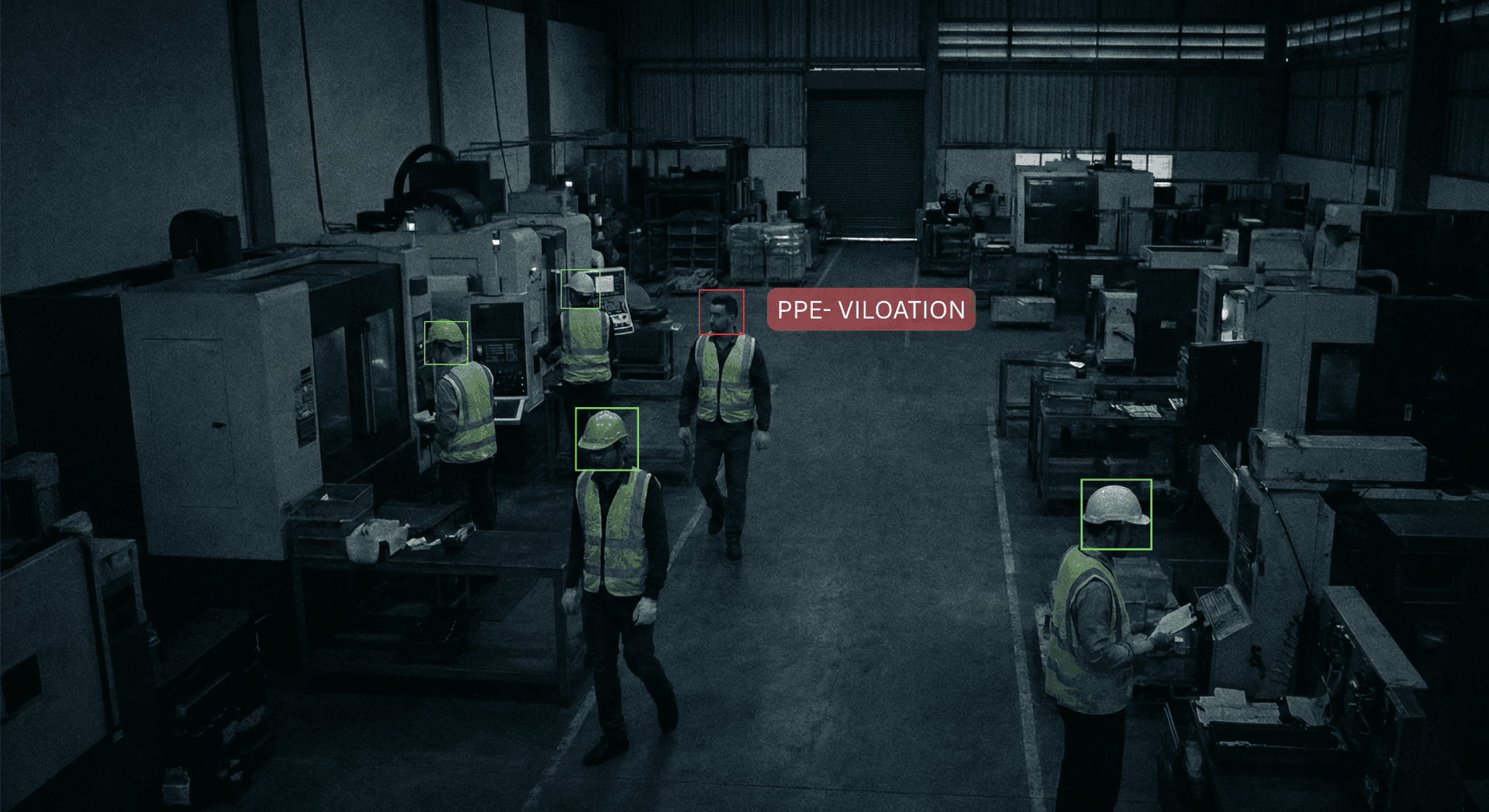
| PPE / dropped objects | PPE detection, hard-hat, FRC | PPE detection |
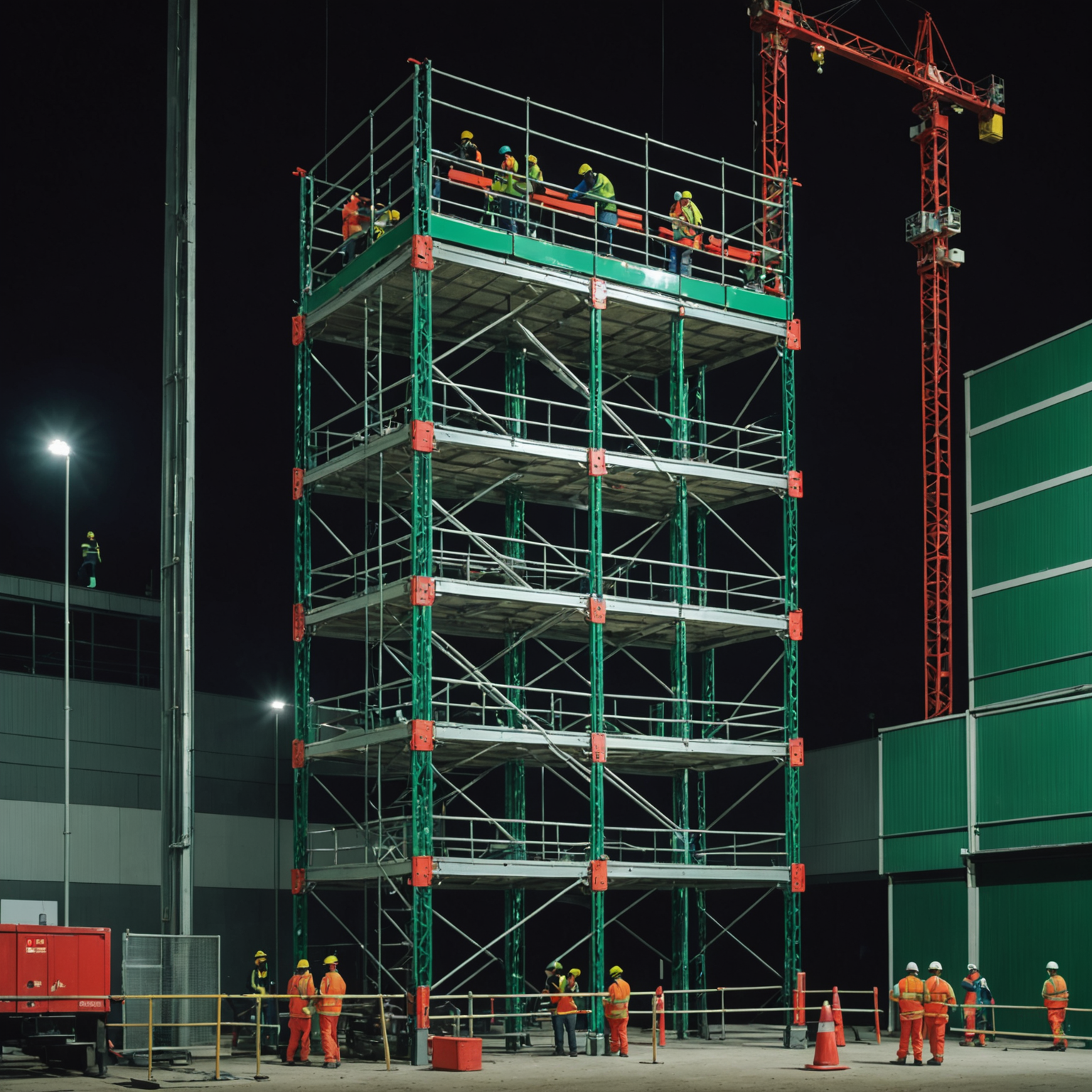
| Working at height | Harness verification, edge-of-floor detection | Work at height |
| Hot work | Spark zone perimeter, spotter detection | Fire/smoke |
| Vehicle interactions | Pedestrian-vehicle separation | Vehicle-pedestrian safety |
| Confined space | Entry-log verification, attendant presence | Access control |
| Energy isolation | LOTO tag presence on equipment | Equipment tracking |
| Lifting operations | Load path, exclusion zone | Danger zone alerts |
NORM (naturally-occurring radioactive material) areas, common in upstream and produced-water units, do not map to vision today and remain a manual procedure — flag this in your scope.
The SAP-PM hand-off that wins audits
The single deliverable that converts a vision system into compliance evidence is a clean SAP-PM notification. The recommended pattern, drawn from the PPE detection guide:
- Each event produces a JSON record with
event_id,timestamp_utc,camera_id,zone_id,lps_code,class,confidence,worker_track_id,clip_hash,permit_id,contractor_id. - A middleware adapter calls the OData endpoint
BAPI_ALM_NOTIF_CREATEwith notification type Y2 (contractor HSE) — confirm with your contracting officer, since it varies by operating organisation [VERIFY-SME]. - The clip stays in WORM storage; the SAP record carries only the URL and the SHA-256 hash.
- Closure of the SAP notification feeds back into the analytics layer as
actioned, completing the loop.
For broader integration patterns, see the AI analytics platform overview and API access.
Permit awareness is non-negotiable
A vision system that is unaware of the active permit chain will generate noise. In Aramco operating organisations, the permit chain typically includes:
- General Work Permit
- Hot Work Permit
- Confined Space Entry Permit
- Excavation Permit
- Work at Height Permit
- Radiography Permit (NORM-adjacent)
Each permit changes the rule set. Hot-work raises spark-zone enforcement; confined-space permits suppress harness violations for the duration of attendant-supervised entries; radiography clears the area entirely and any human detection becomes a high-priority event. Wire permit state from SAP into the inference layer through a small API hook — do not rely on supervisors toggling rules manually.
NORM, hot work and the audit trail
Two scenarios deserve a specific design pass.
Hot work. The vision system should verify: spark-zone barricade visible, fire-watch attendant present, fire extinguisher in frame, no flammable material in the 11-metre exclusion zone [VERIFY-SME — confirm zone in current CSM]. Each event ties to the Hot Work Permit ID and to LPS-04.
NORM. Vision cannot verify radioactive contamination but can verify: barrier integrity, sign presence, controlled-access supervision. Tie to LPS-09 and to the radiography permit. Be explicit in the design that NORM measurement remains a manual procedure with calibrated instruments.
Building the audit pack
Aramco contractor audits in 2026 expect a standard pack. Build it from the start; do not retrofit it.
- Model card — training-set demographics, class balance, validation precision/recall per class, drift posture.
- Threshold register — IoU, confidence, persistence rules per class, with version history.
- Permit map — which permit suppresses or amplifies which rule, with the SAP linkage.
- Clip vault — WORM storage, daily SHA-256 hash signing, retention schedule keyed to PDPL retention rules.
- DPO sign-off — lawful basis, cross-border posture, sub-processor list (trust/sub-processors).
- IKTVA evidence — Saudi-content score and certificate, especially when bidding new work; see the IKTVA guide.
Vendor selection for the EHS file
Three filters that trim a long list to a workable shortlist:
- Saudi data residency confirmed in writing, with a CST-licensed cloud region.
- SAP-PM hand-off demonstrated on a reference customer, not on a slide.
- Edge inference support with measured latency on Hailo-8 or Jetson Orin — desert sites do not get reliable backhaul.
Pair those with an honest comparisons review and the top 10 platforms shortlist.
Common contractor mistakes
Recurring patterns from 2024–2026 audits:
- Treating the system as monitoring, not evidence. Without WORM clips and SAP-PM linkage, the system has no audit value.
- No permit-aware suppression. False-positive volume kills supervisor trust within a month.
- Ignoring the contractor scorecard. EHS scores roll into IKTVA and into next-cycle bid weighting.
- Skipping shadow mode. First two weeks should log without escalating, to calibrate thresholds against the site’s actual rhythm.
Next steps
If you are scoping an Aramco contractor EHS deployment, start with the PPE detection contractor guide, the safety solution overview and the PDPL compliance checklist. Cross-reference the GACA drone permits guide if your scope includes aerial inspections.
Book an Aramco contractor scoping call and we will produce a site-specific LPS map and SAP-PM hand-off design within 10 working days.